Baby Booties for Newborns


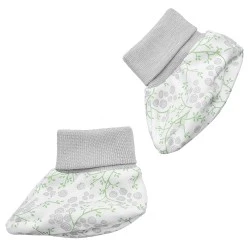


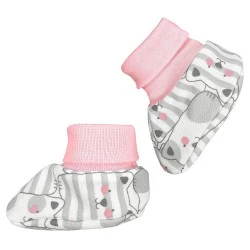
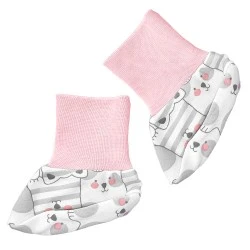
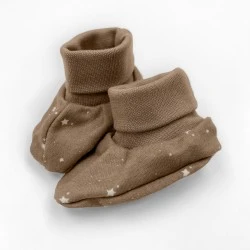
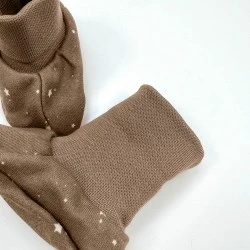

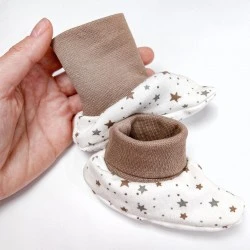

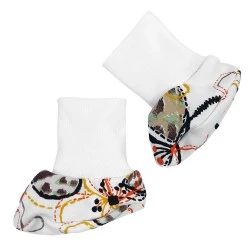
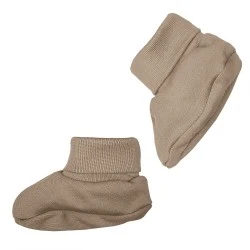
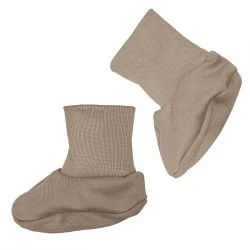
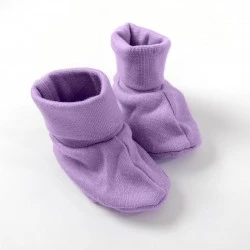

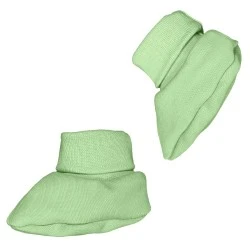
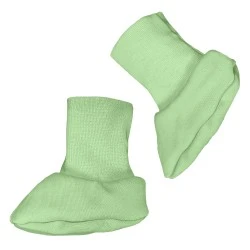

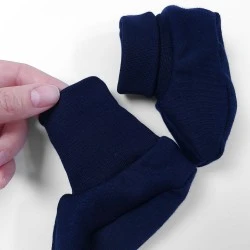

Baby Booties for Newborns
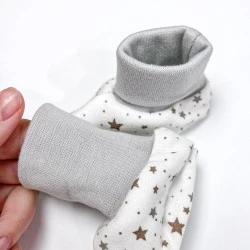
Booties aren't just a cute alternative to regular baby socks — they're actually the better choice. Unlike a sock, a bootie lets your baby's toes move freely instead of holding the foot in a fixed shape, which helps with natural muscle development.
Booties vs. Regular Socks
- Toes can move and stretch freely, instead of being held rigid
- A soft, high cuff keeps the bootie in place without gripping the leg
- No tight elastic band digging into delicate skin
What to Look For
Like the rest of a newborn's wardrobe, booties should be made only from soft, natural fabric — no synthetic blends and no knitted wool. Even adults find synthetic socks uncomfortable; a newborn's skin is far more sensitive. Many neonatologists specifically recommend cotton over wool, since it's hard to predict in advance how a baby's skin will react to wool or other yarns.
Styling
Booties pair easily with a bodysuit, kimono top, or hat from the same print collection for a coordinated outfit. They're also a good pick for summer walks — light enough to keep skin breathing while still covering your baby's feet.
FAQ
Are booties better than regular socks for a newborn?
Yes — a bootie's soft, high cuff holds it in place without restricting toe movement, while a regular sock's elastic can press on delicate skin and doesn't allow the same freedom of movement.
Should I choose wool or cotton booties?
Cotton is generally the safer choice — it's difficult to predict how a newborn's skin will react to wool, so many neonatologists recommend natural cotton instead.
What size booties does a newborn need?
Tunes booties come in 0–3 month and 3–6 month sizes.
Featured